Showing posts with label questioning. Show all posts

Pasta + Glitter + Glue

Mar 2, 2012

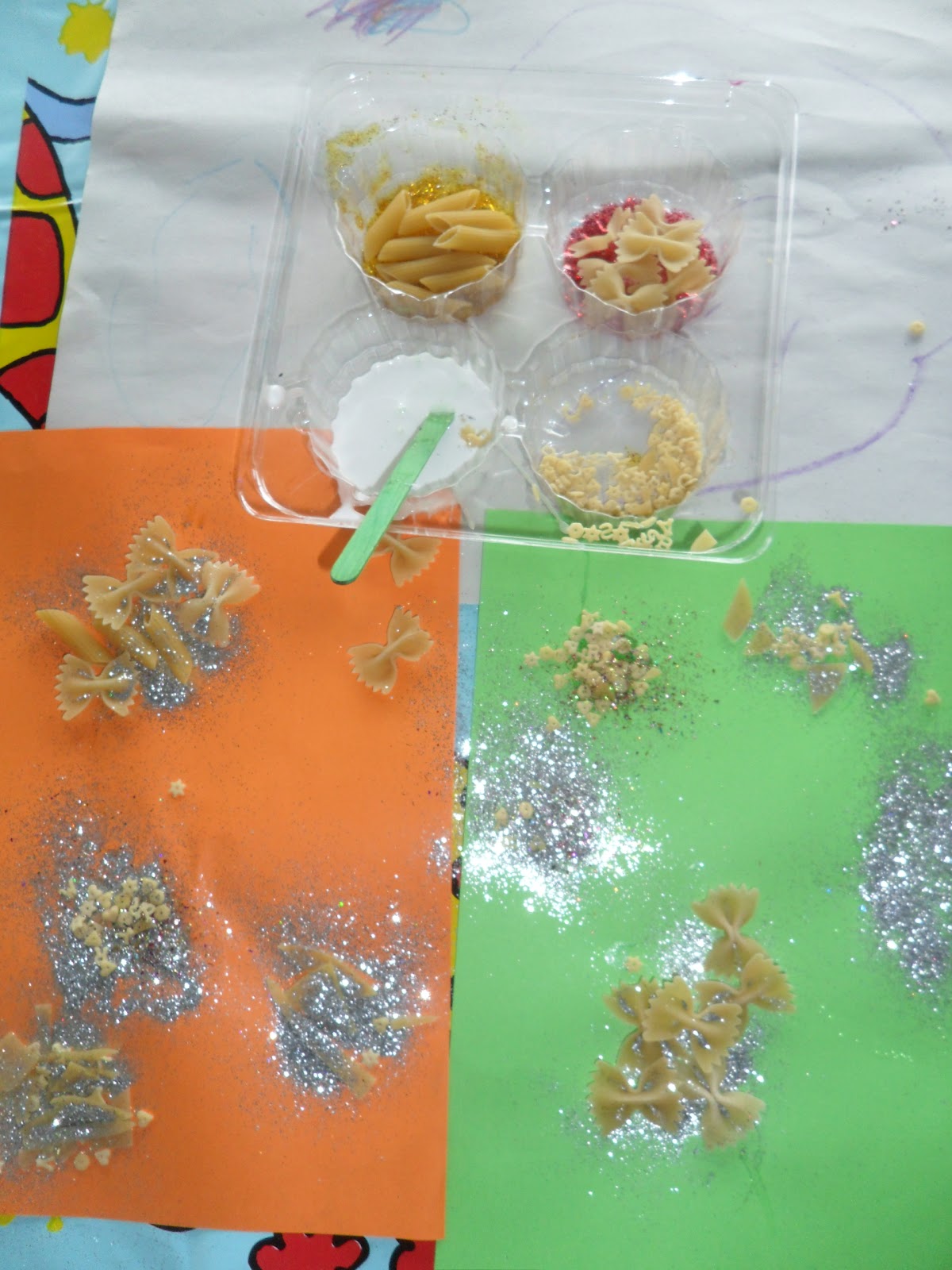
Using just 3 elements and some different coloured paper backgrounds provided a fun and creative little activity.


 These few materials were so appealing for little hands and minds that the pages were quickly filled


Learning about the order (glue BEFORE glitter etc) and practicing fine motor skills are just a couple of learning experiences that were practiced in this activity


Some tips:

- Using different varieties of pasta allows for different shapes, textures, sizes, uses etc to be explored and discussed

- Extend this activity by creating and discussing patterns

- Talk and ask questions while your child is busy at work. "What does that shape pasta remind you of?" "Why do you think there is a hole in that pasta?" "Why is the glitter so shiney?" etc.

- Give your child different types or colours of paper to create their masterpiece on. See and talk about the different things they create on different pieces and take the time to talk about the different colours.


Debs :)

Continue reading...


Magic Milk and Brilliant Bubbles

Feb 22, 2012

This is a fabulous little experiment that will delight your children (and you, thanks to how easy it is).

It takes very few ingredients that can be found easily around the house.


 Pour enough milk to cover the bottom of a plate


 Add some food colouring


 And then some dishwashing liquid to the centre of the food colour


 It instantly splits the colour and gives you a tie-dye effect. "Woah!"


 After splitting it as far as we could, adding more and more dishwashing liquid she used a paddle-pop stick to swirl it all together


 Experiment over? It could be, but no, let's add a straw and blow bubbles. Talk about your observations


 Will the same experiment work with water instead of milk? You'll have to try to find out. If your child is ready, talk about why or why not.


 Bubble blowing is so much fun that it doesn't matter the result!


Wow! "When I blew really softly I made a GIGANTIC bubble"


Some tips:

- To simplify this activity, pour the milk and food colouring in yourself and have your child dip a cotton tip in detergent and then into the food colour

- To extend this activity, try using lots of different colours on the one plate and see what happens. Can you and your child create a colour wheel?

- You can use this activity to experiment with colour mixing

- Talk with your child about what they think is happening and why. Use different vocabulary and lots of descriptive words (adjectives) to extend their literacy skills.

- If blowing bubbles, see what the difference in the bubbles is if you have more or less detergent or if you blow harder or softer.


Debs :)
Continue reading...


Gooey Flour Fun!

Feb 20, 2012


If your child is anything like my child, then the idea of experimenting and playing with real ingredients is very appealing.

This activity has a couple of different elements to it and therefore practices many skills and provides many opportunities for learning.

Squishy gooey fun = learning!

From pouring, measuring and mixing to squeezing, drawing, creating and playing, this super sensory activity could keep them entertained (and learning) for ages!


 Using whatever quantity of plain flour you'd like to give them, combine enough water to make a gooey but not too runny, paste. This is a good time to allow your child to experiment.


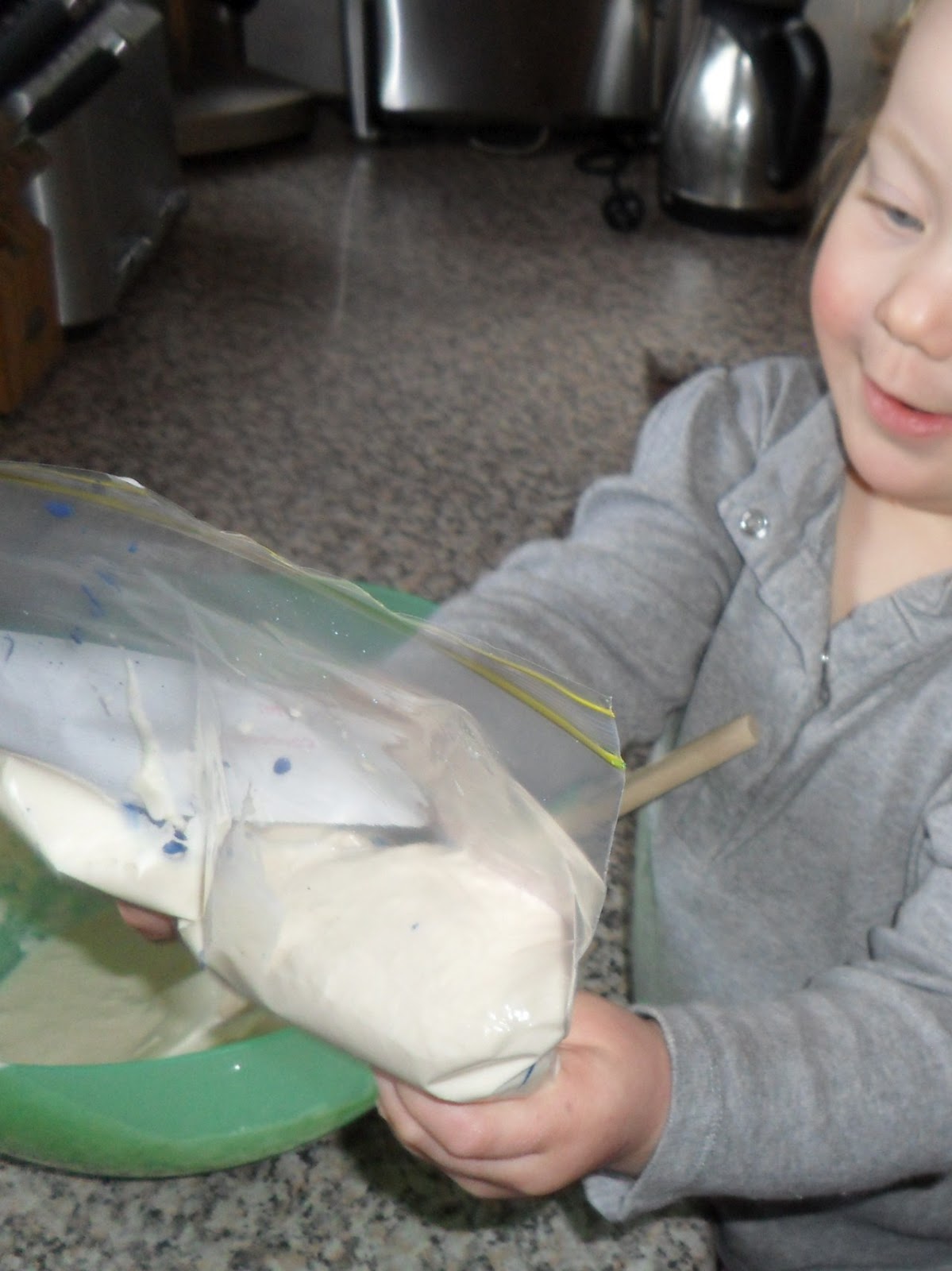
 Once the flour paste was ready we divided it into separate ziplock bags and added a different colour into each bag. (We used a small amount of paint but food colouring would be good too)


 Once you've added the colour, seal the bag and then let your child play with and manipulate the bag until the colour is mixed through.


 Our 2 bags are ready for use.


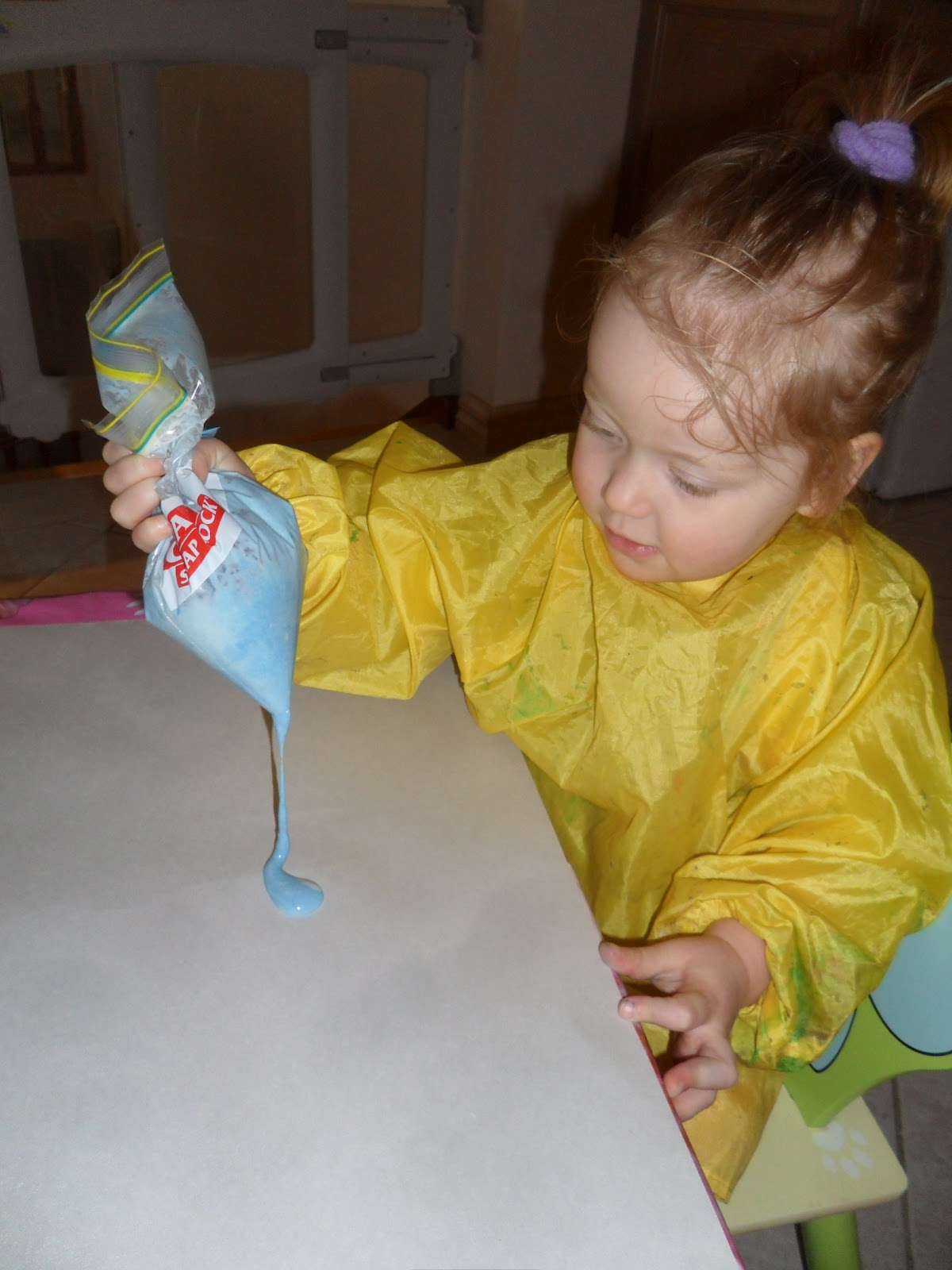
 Snip off a small corner of one of the bags and let your child pipe to their hearts content


 Practicing drawing lines


Listen to your child as they experiment and talk with them about what they are doing. Here my daughter was creating "little ponds and rivers that flowed into each other".  


 After a long play with the blue colour and after swishing it into a gigantic "pond" it was time to add another colour.


 We talked about the contrast the colours made and she observed how the pink smoothed out across the blue paste easier than straight on the paper.


 Time to swirl the colours together.


Talk about how it feels on their hands and between their fingers.


Look at how it stretches and falls onto the paper. Whoops, the paper got a hole in it, why?


Handy Tips:

- To get the right consistency for the flour paste will take a bit of experimenting. Encourage them to add the water slowly and keep mixing so as not to add too much.

- To add the colour we used a small amount of paint but you could use food colours or whatever you have on hand.

- To simplify this activity, cut out the amount of processes your child participates in. Perhaps just provide them with the bags readymade and let them squeeze it out OR instead of squeezing, just provide them with the flour paste to play with

- To extend this activity talk about colour mixing when adding the colour to the bags. The red paint turned the flour paste pink because of the white base etc. Try adding two colours to one bag to see the colours combine and learn which colour they create. Try making a couple of different consistencies and see what difference that makes.

- When talking with your child, listen to what they say and then repeat it back to them using different descriptive words to broaden their vocabulary.


Happy playing,
Debs :)


Look where else we are. Do you play with us here? :)
New Here? Subscribe to get all activities sent directly to you
Enter your email address:


Delivered by FeedBurner
Continue reading...


PVA Painting

Feb 16, 2012

This activity used PVA glue as the base with some paint for added colour.

Painting is such a regular activity at our house that we are always needing to find new ways to paint to keep interested and learn new things!

You can use this activity to focus on a variety of things from patterns to textures to colour mixing and more.


To avoid big messes, I always have things set up well to make it easier.


Pouring in the PVA glue. Listen to the observations your child makes as they do this. Lead them by asking them what they see? What is the glue doing? Why do you think it's doing that? etc


 Adding some paint for colour. How much paint should we add? Let them play around with this and explore for themselves.


 Mixing the glue and paint together. Watch as it makes swirls and eventually all blends into one. Talk about the shade of the colour if your child is at that level.


 Pouring and squeezing takes a lot of concentration. What happens when you hold the bottle higher or lower?


Swirling the coloured glue together. "I'm making purple!"  


Once the novelty of painting with paddle pop sticks wore off, it was time to tip and swirl the glue out.


 Watching how the glue fell and observing the patterns she could make


 Time to swish it all together


Couldn't resist painting her hand. "It feels so sticky! Not like real paint" 


After hand printing for a while she wanted to stick paper down and peel it off. She was delighted about this.

Some tips:
- To simplify this activity for younger children, pre pour and mix the glue and paint and just let them paint and experiment with it
- To extend the activity, see what happens if you paint on plastic instead of paper and let it dry!
- The key to ensuring your child is making connections about what they are experiencing is by talking with them about their observations
- Ask your child questions about what they are experiencing to help lead them in their understanding
- Keep a damp cloth beside them so that they are able to wipe down their hands easily and quickly

Debs :)
Continue reading...